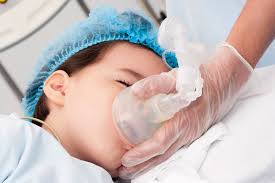
Dental treatment in ASD
Normal dental settings
First option, usually in cooperative children
“First option, usually in cooperative children ”
Dental examination and treatment such as prevention, filling and removing of loose/broken teeth can be done in normal dental setting if the child is cooperative.
Dentists will use the behaviour management technique in order to deliver the dental treatment to ASD children, such as:
1. Systematic desensitization is a psychological technique that can be applied to modify behaviours of anxious patients in the dental setting.
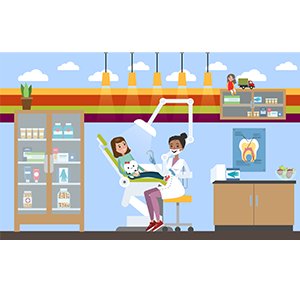
2. Sensory-adapted dental environments : intervention includes adaptions of the clinical setting (e.g., dimmed lighting, moving projections such as fish or bubbles on the ceiling, soothing background music, application of wrap/blanket around the child to provide deep pressure input) to produce a calming effect.
Patients may review information regarding the dental office and environment at home with a preparation book or video or by viewing the practice website. Parents may model actions (e.g., opening mouth and touching cheek) and practice with the child at home using a dental mirror.
Sedation by nitrous oxide/oxygen inhalation
Second option, in moderately cooperative children
“Second option, in moderately cooperative children ”
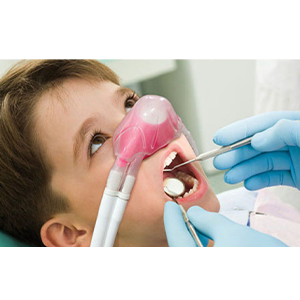
The paediatric dental specialist will conduct the inhalation sedation on the dental chair.
This technique is suitable for ASD child who is moderately cooperative and able to sit on dental chair and communicate well with the dentist.
The dentist will mix the nitrous oxide and oxygen gas according to the needs of the child to calm them down.
The onset of action is quick, the effects can be titrated and reversible, and recovery is fast and complete.
Contraindications:
- Young and uncooperative ASD child.
- ASD child with a respiratory infection.
General anaesthesia
Third option, in uncooperative children and very young children
“Third option, in uncooperative children and very young children”
The procedure will be done at hospital by the paediatric dental specialist, assisted by anaesthetist.
The child needs to be admitted and will be put into an unconscious state in the operating theatre during the procedure.
Assessment of the child before the procedure by the paediatric dental specialist and the anaesthetist is important to avoid complications and life threating events during the procedure.
Contraindications:
- Depend on the medical assessment done by the specialist.